
The history of the rebus
Updated August 13, 2026 · 6 min read · by the Rebus Master team
The rebus is one of the oldest word tricks in the world: using a picture for its sound instead of its meaning. That single idea helped turn drawings into writing about 5,000 years ago, decorated the shields of medieval knights, amused Leonardo da Vinci and Lewis Carroll, filled newspaper puzzle pages, powered a TV game show for decades — and lives on every time you text somebody “I ❤ U”.
The rebus principle: how pictures learned to spell
Early writing had a problem. Drawing a sun to mean “sun” is easy — but how do you draw “belief”, or “tomorrow”, or somebody's name? The breakthrough, which scholars call the rebus principle, was to borrow a picture for its sound: draw a bee and a leaf, and suddenly you can write belief. Scribes in Egypt and Mesopotamia were using exactly this trick around 3200–3000 BCE, stretching a limited set of pictures into a system that could record anything people could say. In a very real sense, the pun came before the alphabet — and every rebus you solve today is a small reenactment of how writing itself got started.
“Not by words, but by things”
The name arrived much later. It comes from the Latin phrase non verbis, sed rebus — “not by words, but by things”. Most accounts trace its puzzle-sense to France around the 16th century, where picture-riddles circulated in carnival pamphlets and drawing-room games; from there the rebus spread across Europe as polite entertainment. The French connection also gave us the classic parlor form: a row of small pictures, letters and symbols that, read aloud in sequence, produce a phrase the images themselves never show.
Canting arms: rebuses you could carry into battle
Medieval and Renaissance heraldry loved a visual pun. Canting arms are coats of arms that spell their owner's name in pictures — the heraldic equivalent of a rebus. The city of Oxford's arms show an ox crossing a ford; families named Bowman bore bows, Castletons bore castles. A knight's shield could literally say his name to people who couldn't read it. Bishops and abbots carved rebuses of their names into the churches they built, which means some of the best-preserved medieval rebuses are hiding in plain sight on stone walls across Europe.
Leonardo's puzzle sheets and Lewis Carroll's picture letters
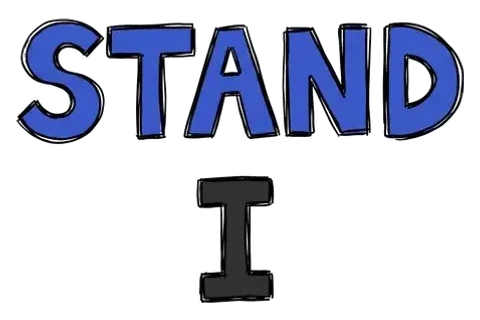
The rebus attracted famous minds. Leonardo da Vinci filled manuscript sheets with dozens of little picture-riddles — quick sketches trading on Italian sound-puns, still kept today in the British Royal Collection. Three centuries later, Lewis Carroll, author of Alice in Wonderland, delighted the children he wrote to by swapping words for tiny drawings in his letters — a deer for “dear”, an eye for “I”. In the 18th century, printers produced whole hieroglyphic Bibles for children, replacing key words of scripture with woodcut pictures so early readers could “read” along — the same reading-by-pictures idea early-learning books still use.
The print golden age
Cheap printing made the rebus a mass medium. From the late 18th century onward, magazines and newspapers ran rebus corners; sweethearts sent rebus letters; advertisers hid brand names in picture-puzzles on trade cards. The Victorian puzzle page — rebuses, riddles, word squares — is the direct ancestor of the modern games section, and of the brain teaser as a genre. By the early 20th century the rebus had settled into the shape most people picture today: a strip of images and letters with a satisfying phrase hiding inside.
The game-show era
Television gave the rebus its biggest stage yet. NBC's Concentration, which premiered in 1958 and ran in various forms for decades, hid a rebus behind a wall of numbered tiles; contestants matched prizes to clear tiles and raced to read the emerging puzzle. It proved something puzzle designers still rely on: watching a rebus reveal itself piece by piece is dramatic — the same slow-reveal tension that drives our own daily rebus, where every correct letter uncovers a little more of the answer.
The emoji era: everyone writes rebuses now
Then the rebus quietly conquered the world again. “I ❤ NY” is a rebus. So is nearly every emoji text where a picture stands in for a word or sound — 🐝 for be, 🌙 for night. Five thousand years after scribes first borrowed a picture for its sound, billions of people do it daily without thinking. The puzzle form never went away either: it just moved into apps. Our own contribution is a modern twist on the oldest trick — an illustrated rebus you decode through a cryptogram keyboard, across 1,300+ levels and one free puzzle in your browser every day.
The rebus timeline
- — Egyptian and Sumerian scribes use the rebus principle: pictures borrowed for their sounds make full writing possible.
- — Canting arms: coats of arms and church carvings spell names in punning pictures.
- — France names the game: non verbis, sed rebus. Leonardo da Vinci sketches sheets of picture-riddles.
- — Hieroglyphic Bibles and rebus letters make picture-reading a household pastime.
- — Newspaper and magazine puzzle pages turn the rebus into mass entertainment; Lewis Carroll mails picture letters to children.
- — Concentration puts a slow-reveal rebus at the heart of a TV game show that runs for decades.
- — Emoji texting makes casual rebus-writing a daily habit for billions.
- — The rebus goes daily-puzzle: a fresh illustrated rebus every midnight UTC, plus galleries with answers and a printable classroom pack.
Rebus history FAQ
How old is the rebus?
The rebus principle — a picture used for its sound — is roughly 5,000 years old and shows up in early Egyptian and Sumerian writing. The rebus as a puzzle made purely for fun is usually traced to 16th-century France.
Where does the word “rebus” come from?
From the Latin non verbis, sed rebus — “not by words, but by things”. The name attached itself to French picture-riddles around the 16th century.
What was the first rebus?
No single “first rebus” survives. The oldest traceable uses are sound-puns inside early writing systems; the oldest rebuses made deliberately for fun are late-medieval canting arms and French picture-riddles.
Are emoji messages rebuses?
When an emoji stands for a sound or a word — 🐝 for “be”, ❤ for “love” — that's the rebus principle exactly. “I ❤ U” is a three-symbol rebus.
Further reading: the Library of Congress on rebus puzzles in historic newspapers, the Wikipedia overview of the rebus, and A Material History of Rebuses.
Up next Put 5,000 years of history into practice Today's free rebus is waiting in your browser — new puzzle every midnight UTC →Keep going
 What is a rebus?Meaning, mechanics and classic examples
 How to solve rebus puzzlesThe 9 tricks that crack any picture puzzle
 Rebus puzzles with answers40 illustrated puzzles, easy to hard
 Printable rebus puzzles (PDF)Classroom-ready pack with answer key

Be part of the next chapter
A new illustrated rebus every day in your browser — and 1,300+ levels in the free app.
Free to play · no sign-up needed for the daily puzzle
About this guide: written by the Favo Games team, the studio behind Rebus Master. We’ve designed and illustrated 1,300+ rebus levels — these guides distill what we’ve learned making them. Illustrations are AI-assisted; every puzzle, hint and answer is written and checked by hand.